
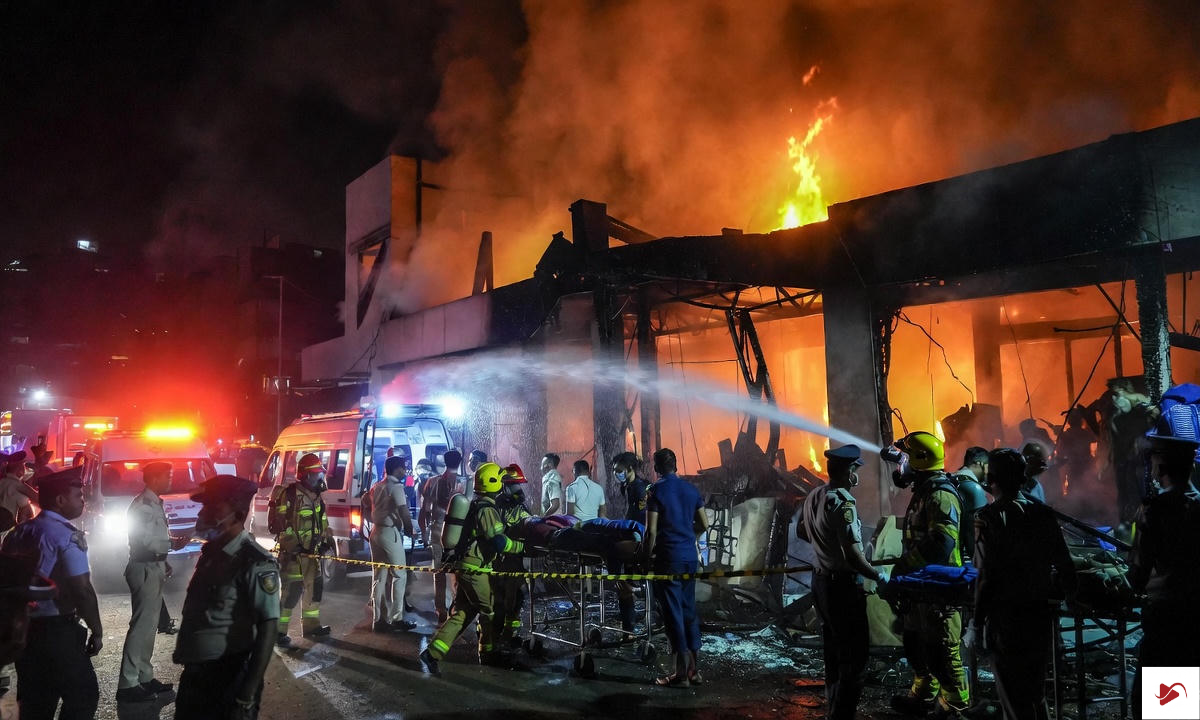
In what has emerged as one of the deadliest fire tragedies to strike India’s tourism capital in recent memory, a massive cylinder explosion followed by a raging inferno at the popular Birch by Romeo Lane nightclub in North Goa’s Arpora village claimed at least 25 lives in the early hours of Sunday, December 7, 2025. The catastrophic incident, which occurred just after midnight on Saturday when the club was preparing to close for the night, has sent shockwaves through the nation and raised serious questions about fire safety compliance at entertainment venues across the country.
The devastating blaze, which trapped victims inside the smoke-filled establishment and left charred remains of what was once a bustling party destination, has prompted urgent government intervention at the highest levels. Prime Minister Narendra Modi expressed deep grief over the tragedy and announced immediate financial assistance of ₹2 lakh from the Prime Minister’s National Relief Fund (PMNRF) for the families of each deceased victim, along with ₹50,000 for those injured in the incident. The Goa government, led by Chief Minister Pramod Sawant, has ordered a comprehensive inquiry and vowed stringent action against those responsible for what appears to be a clear case of fire safety violations.
The Tragedy Unfolds: Midnight Horror at Arpora’s Party Hub
The nightmare began at approximately 12:04 AM on Sunday when the Goa Police control room received the first distress call about a fire at Birch by Romeo Lane, a trendy restaurant-cum-nightclub located in Arpora village, roughly 25 kilometers from the state capital Panaji. The establishment, situated in the heart of North Goa’s famous Baga tourist belt, had opened just last year and quickly became a popular destination for both domestic and international tourists seeking Goa’s legendary nightlife experience.
According to eyewitness accounts and preliminary investigations, the fire originated from a cylinder explosion near the club’s kitchen area on the ground floor. At the time of the blast, the establishment was in the process of winding down operations for the night, with most patrons having already left the premises. However, kitchen staff, service workers, and some remaining guests found themselves trapped as flames spread with terrifying speed through the structure, fueled by the explosive force of the cylinder blast and possibly aided by flammable materials within the nightclub.
Sanjay Kumar Gupta, a security guard who was stationed at the nightclub’s entrance when disaster struck, provided a harrowing account of those crucial moments. “The incident happened between 11 PM and 12 AM. It was really crowded at that time,” he told news agency ANI, his voice still trembling from the trauma. “Suddenly, there was a fire… I was at the gate… A DJ and dancer were going to come here, and it was about to get really crowded.” His words paint a chilling picture of how much worse the tragedy could have been had the fire erupted just an hour or two earlier when the club was at peak capacity with hundreds of revelers.
Another security guard working near the premises initially mistook the explosion for something far more benign. “I heard an explosion and thought it was a tyre burst,” he recounted. “But then I realized it was a cylinder blast. The flames spread so quickly—it was terrifying.” The speed and intensity of the fire left little time for escape or rescue, trapping victims in a deadly combination of flames, smoke, and toxic fumes.
Racing Against Time: Emergency Response and Rescue Operations
The moment the distress call reached the Goa Police control room at 12:04 AM, emergency protocols were activated with military precision. Police teams, fire brigade units from multiple stations, and ambulances rushed to the scene, navigating through the quiet night to reach the blazing inferno that was once a vibrant entertainment venue.
Goa Director General of Police Alok Kumar confirmed the swift response in a statement to media outlets. “The police control room received the first alert at 12:04 AM. Police, fire brigade, and ambulances were rushed to the spot immediately,” he stated, emphasizing the urgency with which authorities responded to the crisis. Multiple fire tenders from surrounding areas were mobilized, with firefighters battling the intense flames throughout the night in a desperate race to control the blaze and search for survivors trapped within the smoke-filled structure.
The rescue operation proved to be a nightmarish ordeal that stretched well into Sunday morning. Firefighters, equipped with breathing apparatus and protective gear, ventured repeatedly into the burning building, pulling victims from the smoky structure while battling flames that refused to be subdued easily. Local residents, awakened by the commotion and the orange glow lighting up the night sky, rushed to the scene to assist emergency personnel in whatever capacity they could.
By the time the fire was finally brought under control in the early hours of Sunday, the full extent of the tragedy became horrifyingly clear. The death toll stood at 25, with many more injured and rushed to nearby hospitals for emergency treatment. The charred remains of the once-popular nightclub stood as a grim testament to the fire’s devastating intensity, with blackened walls, collapsed sections, and twisted metal fixtures marking where a vibrant entertainment venue once stood.
The Victims: Lives Cut Short in Their Prime
The human toll of the Birch by Romeo Lane tragedy extends far beyond mere statistics. Of the 25 confirmed deaths, the overwhelming majority were kitchen workers and service staff—hardworking individuals who were simply doing their jobs when catastrophe struck. Chief Minister Pramod Sawant confirmed that the victims included three women, adding another layer of tragedy to an already heartbreaking incident.
Local BJP MLA Michael Lobo provided further details, stating: “All the 23 bodies have been recovered from the premises and sent to the government medical college at Bambolim.” The discrepancy in death toll figures reported by different officials—ranging from 23 to 25—reflects the chaotic nature of the tragedy and the ongoing process of victim identification and casualty confirmation.
Perhaps most poignant was the revelation that among the deceased were three to four tourists who had come to Goa seeking the joy and relaxation that India’s premier beach destination promises its visitors. These individuals, whose identities are still being confirmed, traveled to Goa with dreams of memorable experiences and carefree celebrations, only to meet their untimely end in a preventable tragedy.
CM Sawant provided additional details about the nature of the fatalities during his late-night visit to the site. “Of the 25 victims, three succumbed to burn injuries while the others died due to suffocation,” he explained, highlighting how the toxic smoke and lack of oxygen claimed more lives than the flames themselves. This grim detail underscores the crucial importance of proper ventilation systems, emergency exits, and fire safety protocols in enclosed entertainment venues.
The bodies of the deceased have been transported to the Government Medical College at Bambolim for post-mortem examinations and formal identification procedures. Families of the victims have begun the agonizing process of traveling to Goa to identify and claim their loved ones, with authorities working to expedite administrative procedures while maintaining sensitivity toward the bereaved.
Fire Safety Violations: A Tragedy Waiting to Happen
As rescue operations concluded and investigators began examining the charred remains of Birch by Romeo Lane, a disturbing picture emerged—this was a tragedy that could and should have been prevented. Chief Minister Pramod Sawant did not mince words when addressing the press following his inspection of the disaster site.
“As per initial information, the nightclub had not abided by the fire safety norms,” the Chief Minister stated categorically, his words carrying the weight of official acknowledgment that negligence played a role in this mass casualty event. The admission that the establishment, which opened just last year, was operating without proper fire safety compliance raises serious questions about regulatory oversight and enforcement mechanisms in Goa’s tourism and hospitality sector.
The club’s failure to meet fire safety standards reportedly included multiple violations that proved fatal when disaster struck. Preliminary investigations suggest the absence of adequate fire extinguishers, lack of proper emergency exit signage and routes, insufficient ventilation systems, and potentially the storage of cooking gas cylinders in hazardous locations that did not comply with safety regulations.
“We will take action against the club management and also against the officials who allowed it to operate despite flouting safety norms,” CM Sawant declared, signaling that accountability would extend beyond the nightclub’s owners to include government officials responsible for granting operational permissions and conducting safety inspections. This commitment to comprehensive accountability represents a crucial step toward preventing similar tragedies in the future.
Local MLA Michael Lobo announced immediate preventive measures in the wake of the disaster. “Officials will conduct a fire safety audit of all the clubs to ensure that such incidents do not recur,” he stated, adding that the Calangute panchayat would be issuing notices to all nightclubs on Monday, December 8, demanding they provide proof of fire safety permissions. “The licenses of clubs not having necessary permissions will be cancelled,” Lobo emphasized, making it clear that the era of lax enforcement had come to an abrupt end.
Prime Minister Modi’s Response: Grief and Financial Support
Prime Minister Narendra Modi responded swiftly to the tragedy, expressing profound grief and announcing immediate financial assistance for the victims’ families. In a post on X (formerly Twitter), the Prime Minister wrote: “The fire mishap in Arpora, Goa is deeply saddening. My thoughts are with all those who have lost their loved ones. May the injured recover at the earliest.”
Demonstrating the government’s commitment to supporting affected families during their darkest hour, the Prime Minister’s Office announced comprehensive financial relief measures. “An ex-gratia of Rs. 2 lakh from PMNRF will be given to the next of kin of each deceased in the mishap in Arpora, Goa. The injured would be given Rs. 50,000,” the PMO stated in an official communication.
This financial assistance, while unable to compensate for the irreplaceable loss of life, provides crucial support to families facing not only emotional devastation but also potential financial hardship, particularly for those who lost primary breadwinners in the tragedy. The injured victims, many of whom may require extended medical treatment and rehabilitation, will receive ₹50,000 to help offset mounting healthcare expenses.
PM Modi also spoke directly with Goa Chief Minister Pramod Sawant, discussing the situation on the ground and assuring him of the Central Government’s full support in managing the aftermath of the tragedy and conducting thorough investigations. “The State Government is providing all possible assistance to those affected,” the Prime Minister noted, acknowledging the state’s response while pledging additional Central support as needed.
Chief Minister Sawant’s Midnight Visit and Commitment to Justice
Chief Minister Pramod Sawant personally visited the disaster site in the middle of the night, arriving while firefighters were still battling the flames and rescue operations were underway. His presence at the scene during those critical hours demonstrated leadership commitment during a crisis that has shaken Goa to its core.
Standing amid the charred remains of the nightclub, CM Sawant addressed media personnel with visible emotion. “Today is a very painful day for all of us in Goa. A major fire incident at Arpora has taken the lives of 25 people. I am deeply grieved and offer my heartfelt condolences to all the bereaved families in this hour of unimaginable loss,” he stated, his words reflecting the collective mourning of Goa’s residents.
The Chief Minister wasted no time in ordering a comprehensive inquiry into the circumstances surrounding the tragedy. “I have ordered an inquiry into this incident. The inquiry will examine the exact cause of the fire and whether fire safety norms and building rules were followed. Those found responsible will face the most stringent action under the law—any negligence will be dealt with firmly,” he declared, setting a tone of zero tolerance for violations that cost innocent lives.
CM Sawant also acknowledged the particularly painful timing of the tragedy. “This is an unfortunate incident during the peak tourist season in the coastal state,” he noted, recognizing that the disaster strikes at a time when Goa’s tourism industry is at its busiest, with thousands of domestic and international visitors flocking to the state’s beaches, resorts, and entertainment venues.
The Chief Minister’s commitment extended beyond immediate accountability to addressing systemic issues. “The people who run such things illegally, and a fire incident occurred…25 people have lost their lives…The government will conduct an inquiry into this incident. The inquiry will examine the exact cause of the fire, and those found responsible will face the most stringent action under the law,” he reiterated, making it abundantly clear that the investigation would be thorough and consequences severe.
Eyewitness Accounts: Terror in the Night
As details of the tragedy emerged through the day on Sunday, eyewitness testimonies painted a vivid and terrifying picture of the nightclub fire’s rapid escalation. Security personnel, nearby residents, and early responders shared accounts that highlighted both the suddenness of the disaster and the heroic efforts made to save lives.
One witness described the chaos that erupted the moment the cylinder exploded. “The explosion was so powerful that even those living nearby felt the vibrations,” he recounted. “People started running out screaming, and locals immediately informed the police.” The powerful blast served as a wake-up call—literally—to the surrounding community, transforming what should have been a peaceful Saturday night into a nightmare of flames, smoke, and desperate rescue attempts.
Another eyewitness working in the vicinity provided crucial details about the fire’s origin and spread. “The fire broke out around 12:00 midnight while cooking was underway in the club’s kitchen. A gas cylinder exploded, spreading the fire rapidly throughout the premises,” he explained. The location of the blast—in or near the kitchen where multiple cooking gas cylinders were likely stored—proved catastrophic as the explosion sent flames spreading through the establishment with terrifying speed.
Videos that emerged on social media platforms showed the intensity of the inferno from multiple angles. One particularly haunting clip, circulating widely on X (formerly Twitter), captured the moment flames erupted from the nightclub’s ceiling while a performer was still on stage. The video, shot from inside the venue, showed fire suddenly bursting through the roof above the stage area, with no visible activation of fire safety equipment—a damning visual testament to the establishment’s inadequate fire suppression systems.
“A singer was performing when flames suddenly erupted from the roof,” one social media user wrote alongside the viral video. “Shockingly, no visible fire safety equipment activated at the moment of the incident. The performers and staff noticed the fire just in time and rushed to safety.” The clip’s circulation has intensified public anger over the apparent lack of basic fire safety measures that might have prevented or at least mitigated the tragedy.
The Aftermath: Charred Ruins and Shattered Lives
Footage from the scene on Sunday morning, after firefighters finally brought the blaze under control, revealed the complete devastation wrought by the fire. Video shared by news agency ANI showed the skeletal remains of what was once a thriving entertainment venue—blackened walls standing like tombstones, collapsed roof sections, twisted metal fixtures, and debris scattered across the property. The once-colorful nightclub, which just hours earlier had been filled with music, lights, and life, was reduced to a haunting landscape of destruction.
The charred structure serves as a stark visual reminder of how quickly celebratory spaces can transform into death traps when proper safety measures are not in place. Investigators combing through the debris on Sunday were working to establish the exact sequence of events that led to the cylinder explosion and to gather evidence that will support criminal proceedings against those responsible for the safety violations.
For the families of the victims, Sunday brought the unbearable task of identifying and claiming their loved ones. At the Government Medical College in Bambolim, grieving relatives gathered, some traveling from distant parts of India after receiving the devastating news. The scenes of inconsolable family members, particularly those who lost multiple relatives working at the same establishment, underscored the tragedy’s deeply personal impact.
The injured victims, numbering in dozens according to various reports, were being treated at multiple hospitals across Goa. Medical professionals worked tirelessly to stabilize patients suffering from burns, smoke inhalation, and other trauma-related injuries. Some victims remained in critical condition on Sunday evening, fighting for their lives as doctors employed every available medical intervention to save them.
Broader Implications: Tourism Safety Under the Microscope
The Birch by Romeo Lane tragedy has thrust Goa’s tourism safety standards into the harsh glare of national scrutiny. As one of India’s premier tourist destinations, attracting millions of domestic and international visitors annually, Goa’s reputation for being a safe, welcoming haven for travelers has been severely damaged by this preventable disaster.
MLA Michael Lobo articulated what many officials and industry stakeholders were thinking. “We will need to conduct a safety audit of all other clubs in Goa, which is very important. Tourists have always considered Goa a very safe destination, but the fire incident is very disturbing, and such incidents should not happen in the future. The safety of tourists and the workers in these establishments is extremely important,” he stated, acknowledging that the state’s tourism brand—built over decades—could be severely impacted if decisive corrective action is not taken immediately.
The tragedy has exposed potential systemic failures in how entertainment establishments are licensed, inspected, and regulated in Goa. Questions are being raised about the adequacy of current fire safety regulations, the thoroughness of safety inspections, the qualifications and training of inspecting officials, the enforcement mechanisms for violations, and the penalties imposed on non-compliant establishments—penalties that clearly were not severe enough to ensure compliance.
Tourism industry representatives, while expressing shock and grief over the tragedy, have called for standardized safety protocols across all entertainment venues. “We need clear, enforceable standards that every nightclub, restaurant, and entertainment venue must meet before receiving operational licenses,” a representative from the Travel and Tourism Association of Goa stated. “And we need regular, unannounced inspections to ensure ongoing compliance.”
The tragedy has also sparked discussions about the need for mandatory fire safety training for all staff members working in entertainment and hospitality establishments. Had kitchen workers been trained in fire prevention and initial response procedures, and had management prioritized safety over profits, the outcomes might have been dramatically different.
National Response: Condolences Pour In
As news of the Goa nightclub fire spread across the nation on Sunday, condolence messages flooded in from political leaders, celebrities, sports figures, and ordinary citizens shocked by the scale of the tragedy. President Droupadi Murmu expressed deep sorrow over the incident and conveyed her heartfelt condolences to the bereaved families, while praying for the speedy recovery of the injured.
Opposition leaders, while offering condolences, also raised pointed questions about regulatory failures that allowed an establishment without proper fire safety compliance to operate during peak tourist season. “This tragedy was entirely preventable,” stated one opposition parliamentarian. “When will we learn that cutting corners on safety costs lives? Those responsible—from club management to licensing officials—must be held accountable.”
The Indian National Congress expressed solidarity with the victims’ families and called for a thorough investigation that would bring all guilty parties to justice. Regional parties in Goa demanded that the state government conduct safety audits not just of nightclubs but of all public gathering spaces, including restaurants, cinema halls, shopping malls, and wedding venues.
Social media platforms were flooded with expressions of grief, anger, and demands for justice. Hashtags such as #GoaFireTragedy, #ArporaBlaze, and #JusticeForGoaVictims trended throughout Sunday, with users sharing information, offering prayers, and calling for systemic reforms to prevent future tragedies. Many users posted videos and images from the scene, some questioning how an establishment without proper fire safety measures could have received operational licenses.
Looking Ahead: Promises of Reform and Accountability
As Goa mourns its dead and the nation grapples with yet another preventable fire tragedy, attention has shifted to ensuring that such disasters never occur again. The comprehensive inquiry ordered by Chief Minister Sawant will examine multiple aspects of the tragedy, including the exact cause of the cylinder explosion, the fire’s rapid spread through the structure, the absence of functioning fire safety equipment, the escape routes available to victims, the response time of emergency services, and the licensing and inspection history of Birch by Romeo Lane.
The investigation will also scrutinize the roles played by various government departments in allowing the establishment to operate despite apparent safety violations. Officials who granted licenses without ensuring compliance with fire safety norms will face accountability measures ranging from suspension to criminal charges, depending on the inquiry’s findings.
The promised fire safety audits of all nightclubs and entertainment venues across Goa, scheduled to begin Monday, December 8, represent a crucial first step toward preventing future tragedies. These audits must be thorough, uncompromising, and followed by swift enforcement action against non-compliant establishments. The era of looking the other way when safety violations are discovered must end permanently if Goa hopes to restore its reputation as a safe destination for tourists and a secure workplace for hospitality industry employees.
For the families of the 25 victims, no amount of financial compensation, government inquiry, or promise of reform can bring back their loved ones. They must now navigate the painful process of grieving, conducting last rites, and rebuilding lives shattered by a tragedy that should never have happened. The ₹2 lakh ex-gratia payment announced by Prime Minister Modi, while helpful, serves mainly as a symbolic gesture of the nation’s solidarity with their grief and loss.
Conclusion: A Wake-Up Call for Safety Compliance Nationwide
The Birch by Romeo Lane nightclub fire stands as a stark reminder that safety regulations are written in blood—each rule exists because someone, somewhere paid with their life when that precaution was absent. The 25 lives lost in Arpora on December 7, 2025, join a tragic list of victims of fire disasters across India, from the Uphaar Cinema fire in Delhi to the Kamala Mills fire in Mumbai, each tragedy prompting promises of reform that too often fade as public attention moves on.
This time must be different. The deaths at Birch by Romeo Lane must serve as a catalyst for comprehensive reform not just in Goa but across India’s hospitality and entertainment sector. Fire safety cannot be treated as an optional consideration or a regulatory burden to be avoided through influence or bribery. It is a fundamental requirement for any establishment that invites the public onto its premises.
For Goa, the path forward requires not just punishing those responsible for this specific tragedy but fundamentally reforming how entertainment establishments are licensed, inspected, and regulated. For India as a whole, the tragedy should prompt a national conversation about safety compliance, regulatory enforcement, and the value we place on human life.
As the sun set on Sunday over Goa’s famous beaches, casting its golden glow over the Arabian Sea, 25 families prepared for the darkest night of their lives—the first of many to come without their loved ones. In their memory, and to honor the innocent lives lost, Goa and India must commit to ensuring that the promises made in the wake of this tragedy translate into lasting reforms that genuinely prevent such disasters from ever occurring again.